

Search and Rescue to Rural Health: SBS Outstanding Senior Flannery Shay-Nemirow, ’25
Ryan Moon
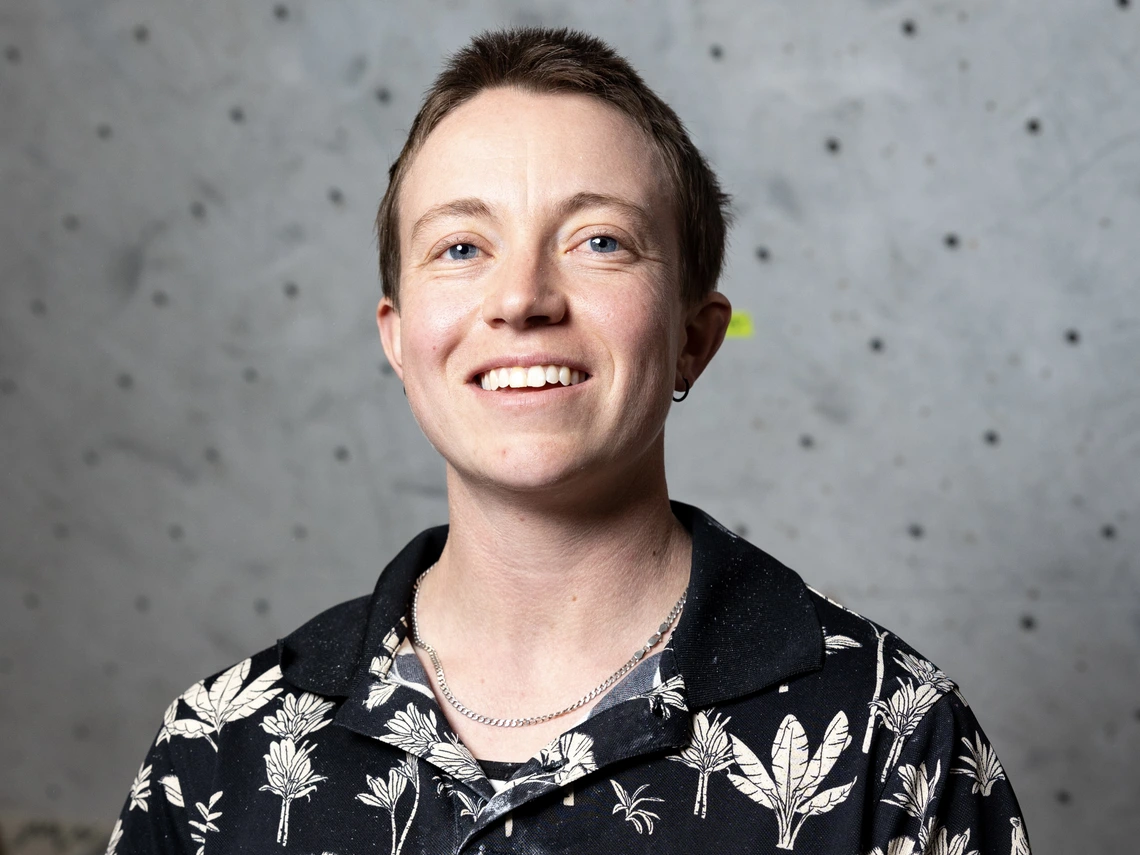
Flannery Shay-Nemirow — who is graduating with a major in Care, Health and Society, and a minor in biochemistry and a 4.0 GPA — is the recipient of the SBS Outstanding Senior Award for fall 2025. The award is given to a graduating senior with a record of outstanding achievement, a history of active citizenship on campus and/or in the local Tucson community, and a demonstrated capacity for leadership.
“Flannery has always gone above and beyond in academic excellence, which is reflected in their GPA,” wrote Carrie Langley, director of Care, Health and Society. “It’s the (same) consistent drive they have demonstrated in all elements: academic excellence, community service, and ongoing drive for discovery — all in an effort to be a better future leader and health professional.”
A non-traditional student, Flannery has steadily worked toward their bachelor’s degree over the years while also balancing a range of impressive roles — working as an EMT, coordinating search, rescue and recovery efforts for the local organization No More Deaths, and working as a routesetter for the International Federation of Sport Climbing and USA Climbing, where they design climbing routes, or “problems,” for athletes to solve on the wall.
All these experiences shaped how Flannery approached their education. Reflecting on the journey and this milestone, they said, “Everything I’ve done that distracted me from school has coalesced into an incredible foundation for education.”
Initially, Flannery imagined a long-term career as an EMT. But everything changed when they began volunteering with No More Deaths.
“Seeing the difference in emergency response to someone dying while crossing the border versus a lost hiker in the Tucson mountains indelibly changed the way I think about power and resource,” Flannery said. “After years on the search, rescue, and recovery team, I knew I wanted to deepen my understanding of medicine and continue working with people who are continually marginalized and oppressed.”
This commitment to under-resourced communities carried into Flannery’s next step — their internship at a rural health clinic in Idaho.
The clinic supports agricultural communities and much of the work took place in outreach clinics. The need is substantial, particularly in light of current immigration enforcement and recent Medicaid reductions.
“This internship experience will no doubt shape how Flannery approaches client care for years to come,” wrote Langley. “While times like these can be frustrating for health professions, they shared with me how thinking outside of the box aligned so well with their vision of person-first approaches.”
On campus and during the internship, Flannery found steady guidance in Langley. Their gratitude for Langley’s support is both broad and specific.
“Dr. Langley has been a huge support and inspiration throughout my time at the U of A. She taught Community Health Care, and I was immediately drawn to her knowledge, experience and compassion … she was also invaluable while I was interning in Pocatello. She always had a contact or response for any healthcare related dilemma I put her way.”
Flannery’s next “problem” is medical school. While they aren’t completely decided on what kind of medicine to practice, they are drawn to rural communities and vulnerable populations.
As they figure out which school and field to apply for, Flannery hopes to bring their experience and skills to another community of people: They are trying to go to the West Bank in Palestine to teach a routesetting clinic at Wadi Climbing.
“I’m looking forward to using my skillsets as a routesetter to bring attention and resources to people who might benefit from them,” Flannery said.
With a foundation built on compassion and commitment, they are prepared for whatever challenges lie ahead.
Climb on, Flannery.
##