

Welcome 2026 New SBS Faculty!

Welcome to our new faculty members, whose diverse expertise and experience reflect the breadth and depth of research, teaching, and community engagement that define the College of Social and Behavioral Sciences. Our scholars explore topics including archaeology and the peopling of the Americas; AI and misinformation; digital journalism; migration, ethics and global conflict; environmental resilience; environmental change and social justice; geography, power, identity and belonging; trauma and healing; Indigenous rights and environmental justice; and more!
Mahdi Asgari
Assistant Professor of Practice, School of Government and Public Policy

Mahdi Asgari (Ph.D., University of Kentucky) is an assistant professor of practice in the School of Government and Public Policy. A specialist in water economics, policy, and agricultural economics, his research utilizes advanced hydro-economic modeling to address critical challenges surrounding regional water supplies, innovative digital management technologies, and the Colorado River water shortage.
Asgari’s academic and professional experience spans institutions across the United States and Iran, including postdoctoral and teaching appointments at the University of Wyoming, University of California, Riverside, and University of Arizona, as well as academic training at the University of Kentucky, University of Tehran and Shiraz University. He is thrilled to be joining the School of Government and Public Policy at the University of Arizona.
April Ely-Black
Assistant Professor of Practice, School of Sociology

April Ely-Black, LCSW, is an assistant professor of practice in the School of Sociology Care, Health and Society program. Prior to joining the University of Arizona, she served for five years as an assistant clinical professor in the School of Social Work at Northern Arizona University. As a licensed clinical social worker, she has worked in hospice, domestic violence, behavioral health, and clinical practice.
Drawing on her experience as a clinician and educator, April is passionate about understanding how relationships, communities, and social systems shape health, well-being, and learning. Her teaching and scholarly interests include trauma and healing, belonging, and relationship-centered education. She continues to integrate mindfulness, compassion, and reflective practice into her teaching, creating learning environments where students experience belonging, curiosity, and meaningful connection.
April is an ACUE Teaching Fellow, having successfully completed the Effective Online Teaching Practices program through the Association of College and University Educators.
Maxim Botstein
Assistant Professor, Department of History

Maxim Botstein (Ph.D., Harvard University) studies the intellectual history of modern Europe, with a focus on the development of higher education and democratic thought. His research interests include the intellectual exchange between the United States and Europe, the interplay between intellectual debates and bureaucratic institutions, and the relationship among politics, society, and culture.
In addition to certificates of distinction in teaching from Harvard, Botstein was also the recipient of a Krupp Foundation Fellowship, a Laurence Hutton Prize in History, and a Fulbright Study/Research Grant for Germany.
Luis Carrión
Assistant Professor of Practice, School of Journalism

Luis Carrión is an Emmy Award-winning multimedia journalist, documentary producer, and educator whose work brings together storytelling, technology, and public engagement. As an assistant professor of practice in the School of Journalism, he teaches multimedia journalism and helps develop collaborative initiatives that connect students with professional production workflows and community-centered storytelling.
Carrión holds an M.A. in Latin American studies and his background spans public broadcasting, Spanish and bilingual journalism, documentary production, and digital media. Drawing on this experience, he encourages aspiring journalists to think critically about how information is gathered, verified, shaped, and shared across television, podcasts, immersive media, and digital platforms.
Carrión is particularly interested in exploring how emerging technologies can support ethical reporting, expand access, and help communities share their experiences in meaningful ways. He brings a calm, curious, and constructive approach to teaching and collaboration, grounded in clarity, accountability, creative exploration, and a commitment to preparing students for a rapidly changing media landscape.
Reyes Espinoza
Assistant Professor of Practice, Department of Philosophy
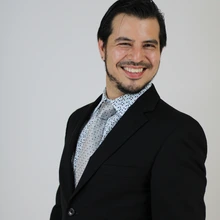
Reyes Espinoza (Ph.D., Purdue University) researches the ethical issues of migration, links between plural cultures, and how technology has played a harmful role in maintaining global conflict. He is currently working on ways to lessen technology’s harmful impacts through moral frameworks.
Espinoza was the 2024-25 Alain L. Locke Visiting Scholar at Purdue University’s Department of Philosophy. His publications include book reviews and articles in peer-reviewed journals including The Journal of Value Inquiry.
Caitlyn Hill
Assistant Professor of Practice, School of Geography, Development and Environment

Caitlyn Hill (Ph.D., Arizona State University) is an assistant professor of practice in the School of Geography, Development and Environment. She also holds a second appointment as an instructor in the Biosystems Engineering Department and will be leading the Future Earth Resilience minor program at the W.A. Franke Honors College. Hill researches how water, climate, disasters, and society interact across coupled human and environmental systems, with particular attention to environmental risk, decision-making under uncertainty, and the ways communities and institutions respond to environmental stress. Hill uses transdisciplinary approaches to connect hydrologic and environmental science with policy, institutions, and community expertise.
Hill’s background spans water resources, environmental remediation, disaster resilience, and applied environmental decision-making in the United States and internationally. Her work focuses on complex water and resilience challenges and how cultural, social, and environmental dimensions of resilience interact. In her free time, Hill enjoys rock climbing and trail running.
KiYong Kim
Assistant Professor of Practice, Department of Communication

KiYong Kim is an assistant professor of practice in the Department of Communication and holds a doctorate of strategic communication from Regent University. He brings leadership and strategic communication experience across nonprofit, higher education, and mission-driven organizations, and previously advised senior executives, led international teams, directed research-driven initiatives, and guided organizational change.
As an educator, Kim creates applied learning experiences that strengthen students’ judgment, confidence, and professional readiness. His teaching, scholarship, and professional service share a common purpose: preparing thoughtful, ethical communicators to lead responsibly in complex organizations and communities.
Kim’s commitment to teaching and mentorship earned him the Teacher of the Year award from the Association for Education in Journalism and Mass Communication (AEJMC). He also holds numerous professional certificates and credentials, including the Accredited in Public Relations credential and Prosci® Certified Change Practitioner credential.
Karen King
Assistant Professor, School of Geography, Development and Environment

Karen King (Ph.D., University of Idaho) is a biogeographer who researches Quaternary landscape dynamics and paleoenvironmental reconstruction. Her work uses dendrochronology and spatial analysis to examine how environmental change affects landscapes and vegetation communities, with a focus on understanding how climate conditions have shaped ecosystems over time.
King’s research explores how hydrologic intensification and other impacts of a warming climate are affecting montane forest communities across North America and the Caribbean. Her research connects present-day climatic and ecological processes with those that functioned in the past, providing a historical perspective for understanding environmental change.
Elisa Marchi
Program Director and Associate Professor of Practice, Human Rights Practice/School of Global Studies

Elisa Marchi (Ph.D., LL.M., University of Florence) joins the University of Arizona as program director and associate professor of practice in the Human Rights Practice program in the School of Global Studies. She also holds a secondary appointment as professor of practice with the Indigenous Peoples Law and Policy Program (IPLP) at the James E. Rogers College of Law, where she directs the Indigenous Rights and Protected Areas Initiative.
Marchi’s work focuses on international human rights law, Indigenous peoples' rights, biodiversity conservation, and environmental justice. She also leads international projects on grievance redress mechanisms in collaboration with the International Union for Conservation of Nature (IUCN) and other international organizations.
From 2021 to 2024, she served as external legal advisor to the United Nations Special Rapporteur on the Rights of Indigenous Peoples and previously worked as a visiting human rights lawyer at the Inter-American Commission on Human Rights.
Ufuoma Ovienmhada
Assistant Professor, School of Geography, Development and Environment

Ufuoma Ovienmhada (Ph.D., Massachusetts Institute of Technology) is an engineer by education and geographer by training, generating data-driven actionable insights about the environmental risks experienced by marginalized identities in the United States. Previously a postdoctoral researcher at the University of Arizona, she joins now as an assistant professor in the School of Geography, Development and Environment.
Ovienmhada’s research agenda uses community engagement, geospatial data science, remote sensing, and critical geographic inquiry to generate empirical analyses that advance environmental and social justice movements. Her current work focuses on the dual crises of climate change and mass incarceration, documenting the environmental risks that people are exposed to during incarceration in the United States.
She places significant emphasis on translational research, including public-facing GIS tools like the Toxic Prisons Mapping Project and partnerships with community organizers, and legal and legislative stakeholders. Her work has been featured by the Marshall Project, Grist, and Reuters.
Mary Prasciunas
Associate Professor of Practice, School of Anthropology

Mary Prasciunas (Ph.D., University of Wyoming) joins the University of Arizona as an associate professor of practice in the School of Anthropology. An archaeologist who works primarily in the U.S. Southwest, she previously served as director of the Center for Archaeological Field Training at Pima Community College. Her research focuses on applied archaeological practice, with specific interests in late Pleistocene hunter-gatherer landscape use and settlement patterns, responses to environmental change, Paleoindian archaeology, the peopling of the Americas and lithic technology.
Prasciunas’s work bridges the gap between academic training and real-world professional practice. She helps students gain the experience and practical skills necessary to navigate the complexities in the field of cultural heritage. To create mutually beneficial, hands-on learning opportunities, she partners with private industry, federal, state, and local agencies, Tribes, museums, and nonprofit organizations.
Shelby Smith
Assistant Professor of Practice, School of Geography, Development and Environment

Shelby Lillian Smith (Ph.D., University of Arizona) is an assistant professor of practice in the School of Geography, Development and Environment. She is a political geographer whose scholarship engages socio-spatial theory, geohumanities, and the geographies of belonging, with particular attention to how power and identity become inscribed onto everyday spaces.
Smith’s current work considers how control over books, reading, and literacy is itself a spatial and political act — shaping whose stories reach a classroom or a public library shelf, and which histories and geographies become visible, contested, or erased in the process.
Rita Tang
Assistant Professor, Department of Communication

Rita Tang (Ph.D., University of Minnesota) joins the University of Arizona as an assistant professor in the Department of Communication. Her research examines how organizations and individuals use AI and social media to address low-quality information and promote accurate information in health risk communication, science communication, and strategic communication. Tang studies how health journalists respond to low-quality information in politicized environments and how misinformation relates to democratic attitudes and political participation.
She uses mixed-method approaches including qualitative methods, including interviews and thematic analysis, as well as quantitative methods, including experiments, surveys, and computational approaches. Tang is passionate about teaching and looks forward to teaching health communication and social media courses. In her free time, she enjoys reading and hiking.
Hailee Tavoian
Assistant Professor of Practice, Department of Communication

Hailee Tavoian is an assistant professor of practice in the Department of Communication whose career spans journalism, strategic communications, consulting and higher education. She holds an M.A. in Strategic Communication from Southern Utah University, where she began her career as a multimedia journalist. Previously, she served as the public information officer for the Town of Sahuarita. As a communications consultant, Tavoian advises executives, brands and creators on strategic messaging, content development and media relations across health and wellness, consumer goods and corporate sectors.
Tavoian brings more than a decade of teaching experience in public speaking and relations, media relations and content strategy at Ohio University, Southern Utah University, and Pima Community College.